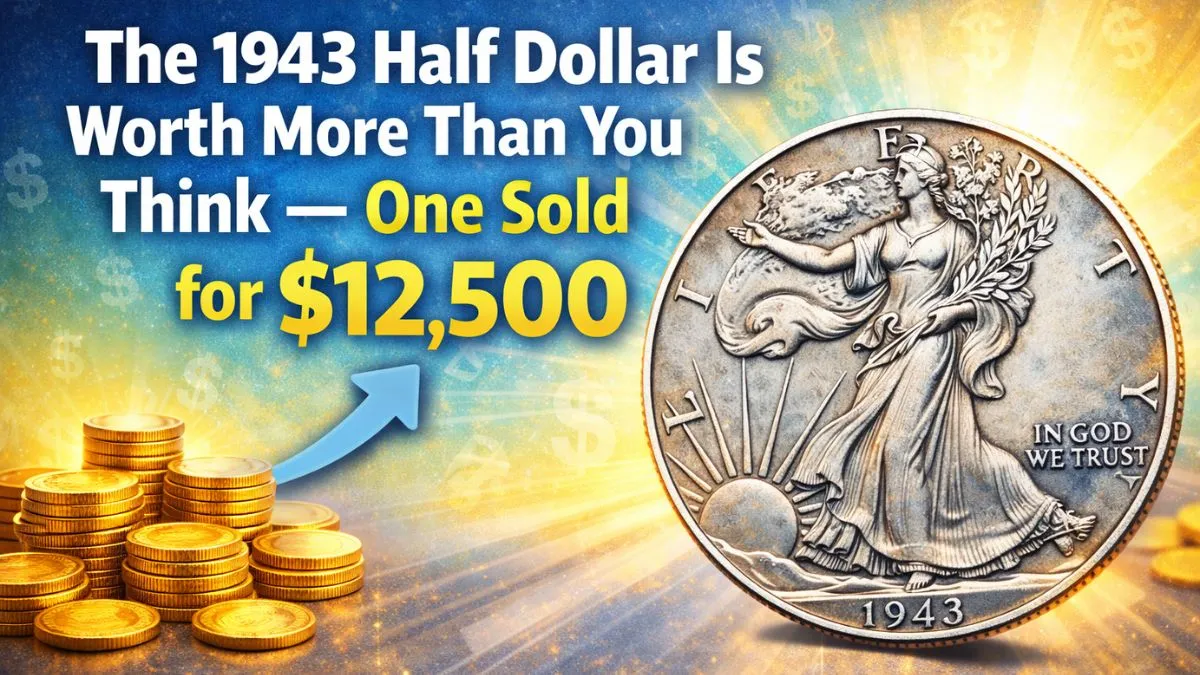
Most people overlook old half dollars, assuming they are only worth face value or a little extra for silver. However, the 1943 half dollar proves that assumption wrong.
Struck during the height of World War II, this coin carries historical weight, artistic beauty, and—under the right conditions—serious monetary value. One exceptional example sold for $12,500, drawing renewed attention to a coin many Americans have seen but rarely examined closely.
What Is the 1943 Half Dollar?
The 1943 half dollar belongs to the Walking Liberty series, produced from 1916 to 1947. Designed by Adolph A. Weinman, the coin features Lady Liberty walking toward the rising sun, symbolizing hope and progress.
On the reverse, a powerful eagle rests on a mountain ledge, wings partly spread. The coin was minted in Philadelphia, Denver, and San Francisco, all using a composition of 90% silver and 10% copper.
Why 1943 Was a Special Year
Coins minted in 1943 reflect a nation fully committed to the war effort. While some denominations changed materials due to metal shortages, the half dollar retained its silver content. These coins circulated heavily, often passing through many hands during wartime. As a result, most surviving examples show noticeable wear, which makes high-quality pieces especially scarce today.
The $12,500 Sale Explained
The headline-making $12,500 sale did not happen by accident. That coin stood out because of its extraordinary condition. It was graded at a very high mint-state level, meaning it showed virtually no signs of circulation.
Its surfaces were clean, its details sharp, and its original mint luster intact. When such a rare-quality coin appears, collectors compete aggressively, driving prices far beyond average market levels.
Condition Matters More Than Age
One of the most important lessons from this sale is that age alone does not determine value. Millions of 1943 half dollars were minted, but only a tiny fraction survived in near-perfect condition.
Coins with heavy wear may only be worth their silver content, while those with minimal wear and strong visual appeal can be worth hundreds or even thousands of dollars.
Typical Value of a 1943 Half Dollar
Most 1943 half dollars fall into a modest value range. Circulated examples usually sell slightly above silver value, depending on market conditions. Lightly circulated or uncirculated coins can command higher premiums, especially if they show strong detail. Only the finest, professionally graded specimens reach four- or five-figure prices.

How to Evaluate Your Coin
If you own a 1943 half dollar, careful inspection is essential. Look closely at Liberty’s gown lines, the eagle’s feathers, and the overall sharpness of the design. Strong luster and minimal surface marks are positive signs. Avoid cleaning the coin, as this can permanently reduce its value. If the coin appears unusually well preserved, professional grading may be worth considering.
Common Misunderstandings About Coin Value
Many people believe all old coins are rare or that silver content guarantees high value. In reality, collector demand depends on condition, rarity at specific grades, and eye appeal. A single high-profile sale does not mean every coin from the same year is equally valuable. Understanding these differences helps collectors avoid disappointment and make informed decisions.
Why Collectors Still Care About This Coin
Beyond its potential value, the 1943 half dollar remains popular because of its design and historical significance. It represents a time when American coinage combined artistry with precious metal content. For collectors, it offers a rewarding challenge: finding quality examples in a series where most coins were heavily used.
Final Thoughts
The 1943 half dollar shows how hidden value often lies in details. While most examples will not sell for $12,500, a select few demonstrate just how high values can go when rarity, condition, and demand align. Whether you are a collector or simply curious, this coin is a powerful reminder that everyday objects can hold extraordinary stories—and sometimes unexpected worth.
FAQ’s
Is every 1943 half dollar worth thousands of dollars?
No. Most are worth silver value plus a small premium. Only rare, high-grade examples have reached five-figure prices at auction.
What makes one 1943 half dollar more valuable than another?
Condition is key. Sharp details, original luster, minimal marks, and professional grading greatly increase collector interest and value.
Does the mint mark matter for a 1943 half dollar?
Yes. Coins from different mints vary in scarcity and demand, especially when comparing examples in higher grades.
Should I clean a 1943 half dollar before selling it?
No. Cleaning damages surfaces and reduces value. Collectors prefer coins with natural, untouched finishes.
