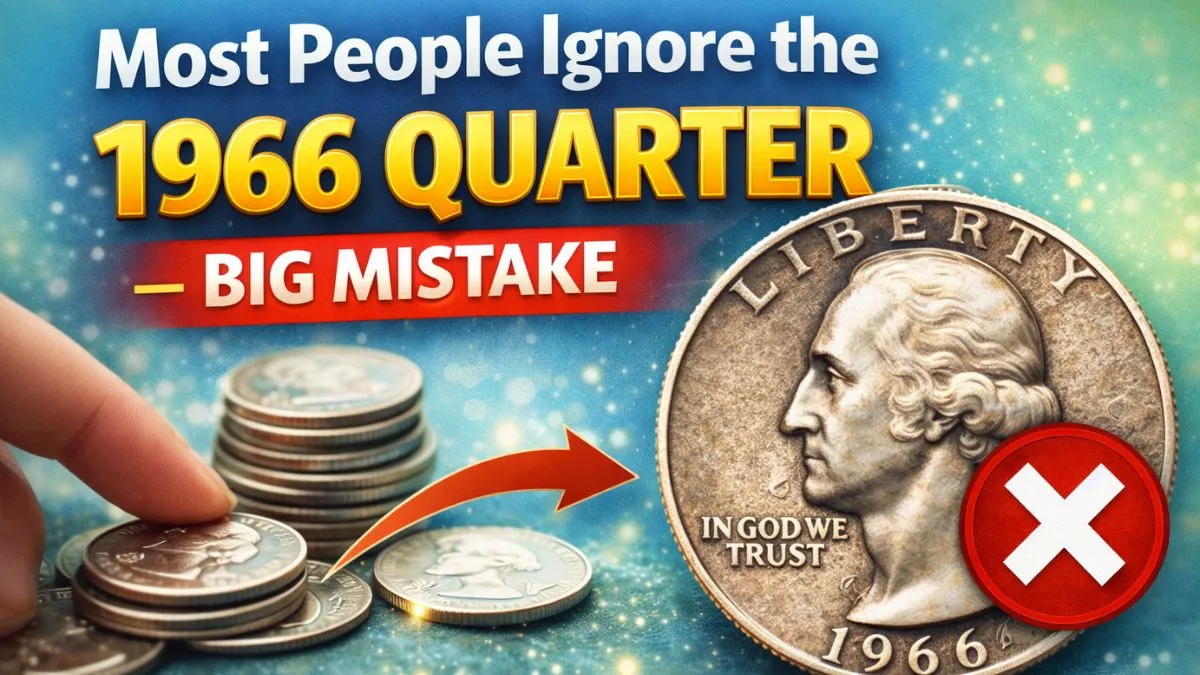
The 1966 quarter is one of the most ignored coins in everyday circulation. Many people glance at it, see no silver shine, and immediately assume it has no value beyond twenty-five cents. That assumption is where the mistake begins.
While the 1966 quarter may not be rare in numbers, it holds historical importance and collector relevance that most people fail to recognize. Understanding why this coin matters can completely change how you view spare change.
This coin represents a critical turning point in U.S. monetary history, and its value lies not in hype, but in context, condition, and knowledge.
The Historical Importance of the 1966 Quarter
The 1960s were a turbulent time for U.S. coinage. Rising silver prices forced the government to remove silver from quarters starting in 1965. The 1966 quarter was produced during this adjustment period, when Americans were still adapting to coins that looked familiar but were made from different materials.
This transition caused confusion, hoarding of older silver coins, and changes in minting practices. As a result, the 1966 quarter became part of a short but significant era where function mattered more than appearance. Coins from such periods are often studied and collected because they reflect economic pressure and national response.
Why the 1966 Quarter Is So Common
Millions of 1966 quarters were minted, which is why they are still frequently found today. High production numbers make many people assume the coin has no collector value. However, quantity alone does not determine importance or desirability.
Most of these quarters entered circulation immediately and experienced decades of wear. Finding one that survived in near-perfect condition is far more difficult than finding a worn example. This difference between availability and preservation is where collector interest begins.
Condition Matters More Than Age
In coin collecting, condition often outweighs age. A heavily worn 1966 quarter is common and usually worth face value. However, a sharply struck, well-preserved example tells a different story.
Collectors look for clear details in the date, lettering, and design elements. Original surface luster, minimal scratches, and strong edges all play a role in determining desirability. Coins that avoided circulation damage are far scarcer than their worn counterparts, even if the date itself is common.
Strike Quality and Minting Details
Not all 1966 quarters were struck equally. Some were produced with weaker strikes that lack sharp detail. Others display stronger impressions with crisp features. These differences matter to collectors who appreciate precision and craftsmanship.

Coins with full design details stand out when compared side by side with weaker examples. Over time, collectors learn to recognize these differences, which is why informed evaluation is essential before dismissing any coin.
Why Collectors Still Seek the 1966 Quarter
Collectors are drawn to coins that represent key changes in history. The 1966 quarter is not just currency; it is evidence of a major shift in U.S. economic policy. It marks the end of precious metal circulation in everyday change and the beginning of modern clad coinage.
Additionally, the 1966 quarter remains accessible. Unlike extremely rare coins locked away in collections, this coin can still be found in everyday transactions. That accessibility keeps interest alive and encourages new collectors to learn through hands-on discovery.
How to Examine a 1966 Quarter Properly
If you come across a 1966 quarter, take a moment before spending it. Examine the coin under good lighting and check for sharp lettering, clean surfaces, and edge definition. Compare it to a heavily worn quarter to notice differences in detail.
Avoid cleaning the coin, as cleaning can permanently damage surfaces and reduce collector interest. If the coin appears unusually well-preserved, it may be worth setting aside for further evaluation.
The Real Mistake People Make
The biggest mistake is not believing the 1966 quarter is rare, but believing it is never worth attention. Coins like this teach an important lesson in collecting: value is not always obvious. It often comes from understanding history, recognizing quality, and paying attention to details others overlook.
Ignoring these lessons can prevent people from developing a deeper appreciation for coins and how real value is determined.
Final Thoughts: Why Awareness Makes the Difference
The 1966 quarter may never be the most famous coin in U.S. history, but it deserves far more respect than it gets. It represents change, adaptation, and a defining moment in American coinage. For collectors, it offers an opportunity to learn how condition and context shape value.
Most people ignore it because it looks ordinary. In coin collecting, ordinary appearances often hide the most meaningful stories.
FAQ’s
Why do most people ignore the 1966 quarter?
Many dismiss it due to lack of silver content, but its historical role and condition-based value make it more important than most people realize.
Is the 1966 quarter made of silver?
No, it is copper-nickel clad, marking a major shift in U.S. coinage that makes well-preserved examples historically significant.
Can a 1966 quarter be worth more than face value?
Yes, coins in excellent or uncirculated condition may attract collector interest and higher value than worn circulation pieces.
How can I check if my 1966 quarter is special?
Look for sharp details, strong luster, minimal wear, and clean surfaces, which indicate better preservation and collector appeal.
